Spring Deities, Gods and Goddesses of Renewal and Rebirth
What Are Spring Deities?
As the earth starts to wake from sleep and the spring rains soften the frozen earth, we may find that we want to work with Deities that match and hold some of that energy. So what does being a spring Deity mean.
Generally, my ancestors thought of spring Deities as maiden or son aspects associated with new growth, flowers, crops, or seeds. Or they might have called on or celebrated Deities that held the energies of beauty or rebirth.
However, in some cultures, Deities were associated with rebirth after a death, or Earth Deities were called on. Sometimes Deities related to sex or fertility were honored. And sometimes they were perceived as female, but not always.
And some regions don’t have a quarterly seasonal cycle, but they have Deities that represent some of these qualities anyway. So much depends on the seasonal cycles and needs of a local group of people, and even within a region, different Deities would have been honored at different points in time. I imagine my ancestors called on very different Deities when they were hunter-gatherers than during later agricultural times.
It’s good to remember that Deities are never just associated with one quality. They are nuanced and complex, just like people.
So having said all this, I work with seasonal energies a lot because that matches my climate. So I want to share a short list of Deities broadly associated with spring.
I have included here Deities, many female, who were associated with the life-giving rains that caused the new crops to grow, or who cared for seeds and young crops, or some who held the energy of youth or flowers.
Working with Cultural Context as a Witch
If any of these are your ancestors’ Deities, try to learn about them from within the context of that culture. Because I am not from many of these cultures, my sources are generally online, various Pagan compendiums (that rarely name sources), and books (which mainly source white men), so I have kept the info general so that if you are from these cultures, you can learn directly from them rather than relying on biased sources. Their names are still powerful, and they will come to their descendants if called.
For example, when I think about Christian spirits, it’s helpful to understand that this tradition is based on qualities such as redemption, savior Deities, death and rebirth, and often fear, or a better afterlife and a moral code. So delve into local mythology and folk tales before working with a Deity, and ask yourself what the worldview of that culture was.
There are many cultures here that are not represented. Some because I rightfully don’t have the knowledge as a Western Euro-descended woman, some because their Deities don’t fit into a seasonal model, or because I couldn’t find info due to the predominant focus on European Deities.
Although some cultures and Deities don’t mind these names being respectfully acknowledged, many cultures and Deities do not want to be invoked by others, particularly traditions under threat. In my view, anyone of any lineage can work with many of the European Deities. Witchcraft is not an unbroken tradition under threat. But always do your research. Deities like respect, and this often includes the people they are associated with.
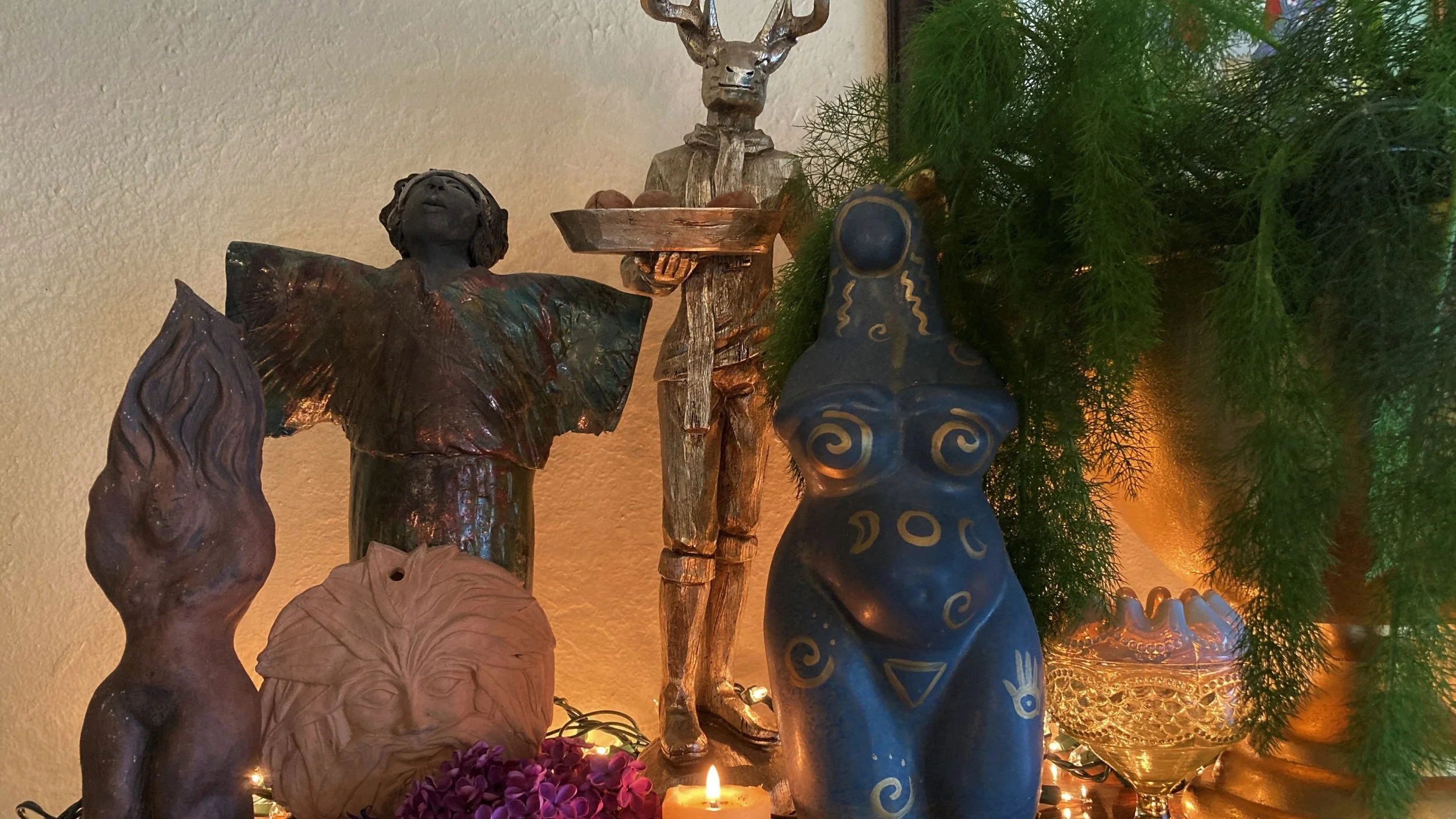
Spring & Rebirth Deities List
African Deities
Hare Ke – Niger, West African – Goddess of the sweet waters, the spring rains that bring life back to the land. Her symbols are seeds, soil, and water. She lives under the River Niger with two dragons as comrades.
Asase Yaa – West African, Modern Ghana – Goddess of the Ashanti people. She is worshipped in the fields and is the one who gives the people the right to grow crops. Her husband Nyame brings the rain that nourishes growth. She was still honored in Jamaica during slavery and as the mother of the trickster God Anansi. In some sources, Nyame is considered female.
Asian Deities
Rafu-Sen – Japanese – Maiden Goddess of plum blossoms. She is associated with spring bravery and wanders the plum groves at night.
Kono-Hana-Sakuya-Hime – Japanese – Lady of the cherry blossoms. Mt. Fuji is her sacred place.
Dewi-Sri – Javanese, Balinese, Sudanese – Pre-Hindu and pre-Islamic underworld Goddess of rice and fertility.
Ma-Gu / Ma-Ku / Mago – Chinese / Japan / Korea – She is associated with spring in much of China and with hemp and healing and is often shown carrying peaches.
Sita – Hindu – Pre-Ramayana stories list her as a daughter of Mother Earth, conceived in a sacred union between the king and the land. A Deity of fertility and agriculture. Later stories focus more on her as consort to Lord Rama.
Sarawati – Hindu – Her festival is in the spring, and she is the holder of sacred wisdom. She carries the lotus blossom. She is also worshipped in parts of Japan, Vietnam, Indonesia, and Myanmar. She is a Goddess triad that works in concert with a triad of Gods to maintain the cycles of life and regeneration.
Mexican Deities
Xilonen – Aztec, Mexico – A Maiden Goddess of the young corn. Part of a triple Deity of agriculture. She is also associated with snakes and blood rites. (see note below)
Xochiquetzal – Aztec, Mexico (but she seems to have been known interculturally) – Maiden Goddess of love, beauty, flowers, fertility, and dance. (see note below)
Greco-Romano Deities
Persephone / Kore – Greek maiden Goddess, daughter of Demeter.
Flora – A Sabine Goddess from the mountainous regions of Italy that predates Roman culture, the Goddess of flowers and the season of spring. Festivals were held in her honor.
Cloris – The Greek Goddess of flowers.
Thallo (Thalatte) – Greek, originally Athenian – One of the Horae. She was associated with flowers and the turning of the year’s wheel in spring.
European Deities
Jarylo – Slavic countries – Polish: Jaryło, Croatian: Jura or Juraj, Serbian: Jarilo, Slavic: Jarovit. Alternatively, Yarylo, Iarilo, or Gerovit, is a Slavic God of vegetation, fertility, and springtime.
Dziewanna – Eastern Europe, Poland, Serbia, Czech, Russia, Slovenia – Very old Wild Hunt Goddess. She rides the land to wake her mother, Lada, from below the earth in the spring. Her name has strong associations with the word maiden etymologically. She was especially honored by farmers. Her mother, Lada, was worshipped as the bringer of spring and love.
Blodewedd – Celtic, specifically Welsh – A spring Goddess created from flowers.
Olwen – Celtic, Welsh – Lady of the golden wheel. On May Day, she returns from the underworld, and shamrocks or white clover appear in her tracks.
Hretha – Anglo-Saxon Goddess of yearly cycles. Her festival was celebrated in March near the equinox.
Eostre / Ostara – The Goddess of spring and fertility in Western Euro tradition, probably Germanic in origin. Her name is also associated with Easter and possibly estrogen. Her sacred symbols are rabbits and eggs.
Artio – Swiss, Southwest Germany – The bear Goddess who hibernates during the winter. Her return heralds the beginning of spring. It is speculated that the bear Deity was one of the most ancient of worshipped beings and was widely honored during the Stone Age across a wide range of land in Europe.
Freya – Nordic – Although she is generally associated with motherhood, she is also linked with flowers and the returning new growth.
Beiwen / Beiwe / Beaivi – Sami (the Indigenous people of Finland, Sweden, Norway, and parts of Russia) – She is a Goddess associated with the return of the sun, regrowth, and reindeer.
When you are working with deities of any kind, try to find out what offerings they might have been given. They like being honored, so always offer something, even if it’s just water or wine. There are many other Deities that hold spring like qualites. This is just a jumping-off point to inspire you.
Blessings on your Path
Colette Gardiner
© Copyright ~ Colette Gardiner Golden Web LLC 2026