Who was the Goddess Eostre? Was She Real?
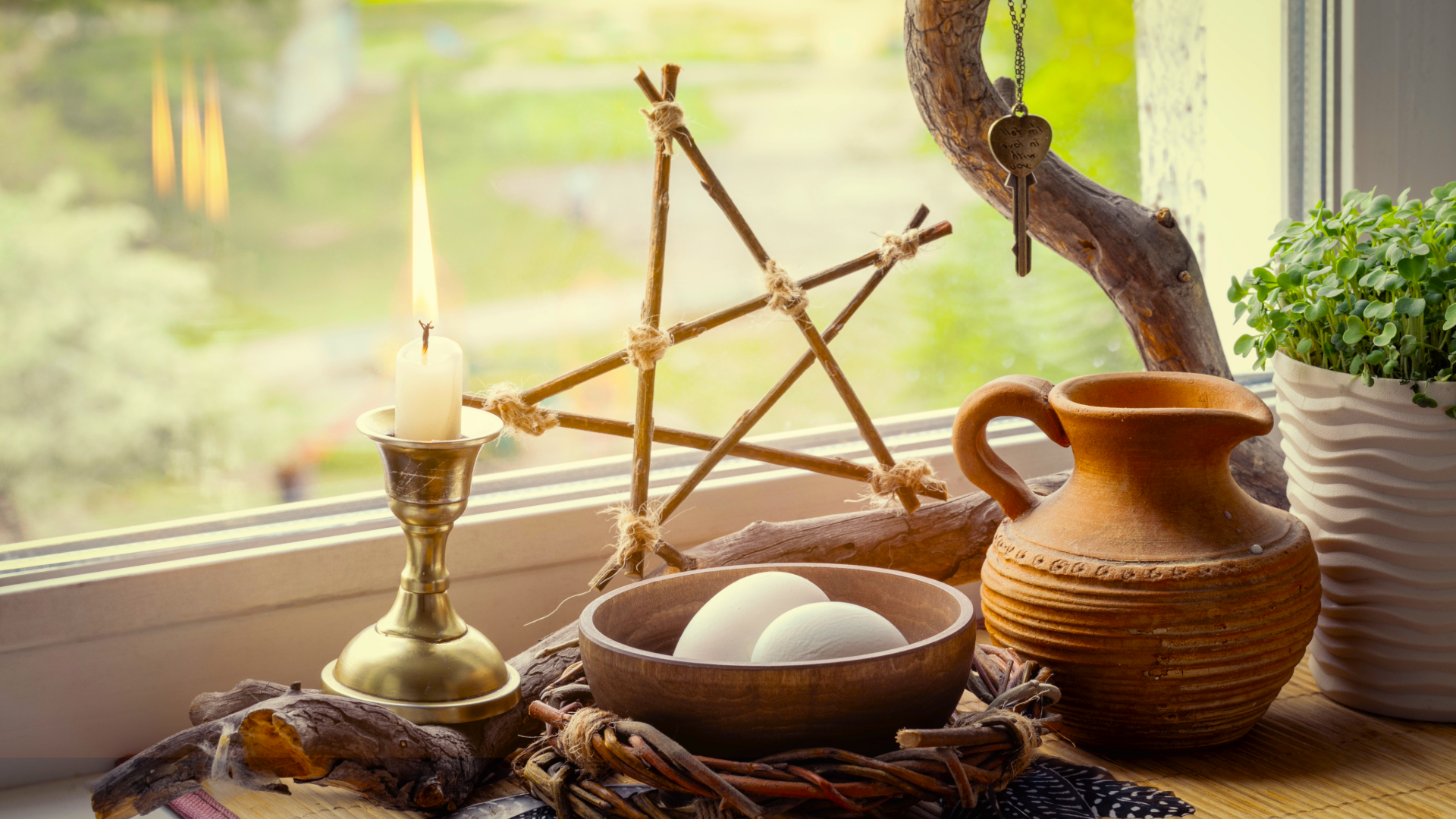
Many people share info about the holiday of Easter and its pagan roots. Some of what people share is truly from pre-Christian traditions, and the rest is either a little over 100 years old or, like many oral traditional religions, there is no evidence of its existence.
What we do know about this time of year is that many cultures in Western Europe celebrated spring festivals in late March and early April. They were all associated with fertility and the abundance of the earth. The Anglo-Saxon name for April's full moon is Egg Moon. Although it is unclear if that was true before Christianization. But it seems possible since most of the Anglo-Saxon moon names are based on what was happening with the land.
Bede and the First Written Record
In his book, written in the early eighth century, St Bede acknowledges that people used to base their months on the moon cycle. He then says that the Anglo-Saxons used to worship a Goddess named Eostre, that the month of April (Ēosturmōnaþ) was named after her, and they had a feast honoring her in that month. According to Bede, they were happy to celebrate Paschal (what we know as Easter), just giving it the name of their older Goddess.
This is the only reference to this Goddess that has been documented. So much has been lost. What we know is that her name relates to the words dawn or east. There are a few monuments that might have her name on them. But they might also be referring to something else.

Linguistics, Grimm, and Germanic Connections
One thing that does lend weight to Eostre as a deity is that, even though Bede was a Christian writing a very opinionated history book, he was writing about current events. Which is great. Much of what we have about pre-pagan lore was written down centuries later.
Linguists often look to see if there are similar names in nearby regions that have a similar cultural background. Which, in this case, would be countries with similar Germanic roots.
Jacob Grimm did a lot of research as well as speculation in the Germanic countries about this. He found that in Old High German, the name for April was Ôstarmânoth. Grim and other researchers speculated that there must have been a Deity named Ostara in Germany.
This was pretty widely dismissed. But in 1958, votive inscriptions dedicated to goddesses called the matronae Austriahenae were found in Germany. And since the first syllable Au or Aus, and similar prefixes, were found in names relating to dawn or light that has been extrapolated to Eostre.
Based on that, linguists suggest that there was probably an early Indo-European deity who was the originator of these later names. It’s not solid proof, but it is more proven than it was when Grimm was writing. It has also been suggested that Eostre was simply a spring holiday with no deities attached to it. Jacob Grimm did a lot of recording of lore, but like many researchers, he had an agenda. He was a bit of a nationalist and was prone to leaping to grand conclusions about Germanic heritage.

Folklore, Symbols, and Modern Additions
Perhaps we will know more in the future. I personally believe she was a deity, and that’s ok because I am not a scientist who needs an engraved statue and written tablets preserved for 1000’s of years honoring her. I’m a witch and how I worship the spirits that show up for me is my right. As a writer and teacher, I like to share what is actually known and let people make their own opinions.
It also makes logistical sense that spring festivals may have had a connection to hares, along with other animals that were prolific, and with cute little baby birds as well. But the stories that describe Eostre having a hare as a companion or having a bird that turned into a hare probably started no earlier than the 1800s. There are no stories or descriptions of her.
Most of the recent stories probably can be traced back to Jacob Grimm speculating about who this Goddess was and if she had widespread worship throughout Germanic countries. Maybe he was onto something, but unlike the symbology of Christmas, which can be traced back to Pagan practices that are hundreds of years old, we really don't know much about spring festivals in Europe. Feasting, drinking, and bonfires were common, though not for almost all festivals.
And there are stories from many Pagan cultures describing stories of death and rebirth related to spring. Often of a son or consort, and in a few cases, they also have the son/consort being resurrected after three days.

Cultural Practices and Modern Perspective
As a side note, the custom of Easter ham started as a way to detect Jews who were trying to pass as Christians to avoid persecution. So messed up.
So yes, Easter is named after a Goddess, and you can absolutely celebrate bunnies, chicks, etc., as symbols of springtime fertility and rebirth. But they are unlikely to have been ancient symbols associated with Eostre. Religions change over time, and that is ok.
Bede source - https://www.tertullian.org/rpearse/bede_on_eostre.htm
Sending all of you spring blessings!
Colette Gardiner
© Copyright ~ Colette Gardiner Golden Web LLC 2026